- Oasis center Princess cars building - 1st Floor - Unit 13-14 Sheikh Zayed Rd - Al Quoz - Al Quoz 1 - Dubai
- info@secureverse.ae
Secureverse Leading Interior Design and Fit-Out Company In UAE

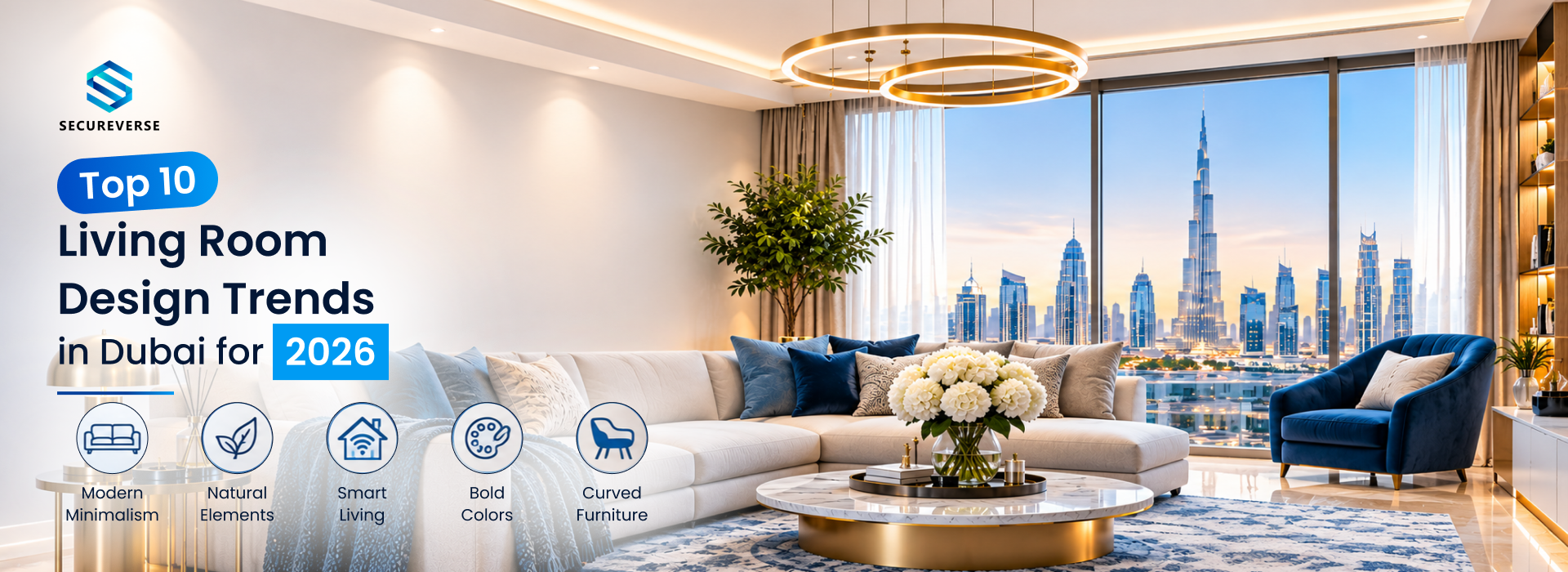
The living room is often the most frequently used space in a home. It is where families relax, guests gather, and everyday routines take place. In Dubai, living room design is evolving beyond impressive finishes and expensive furniture. Homeowners are paying more attention to comfort, practical layouts, personal style, and technology that makes daily living easier. Choosing the Best Interior Design Company in Dubai can help bring these elements together, creating a living room that balances visual appeal with everyday functionality.
In 2026, the direction is toward warmer interiors, natural textures, softer shapes, flexible furniture, and smart features that blend into the design. Whether you live in a compact apartment in Downtown Dubai or a spacious villa in Arabian Ranches, the right design choices can make your living room feel more welcoming and functional.
If you are planning a renovation or a complete home upgrade, these ten living room design trends can help you create a space that looks current without losing its long-term appeal.
Cool grey and stark white interiors are making room for warmer colour combinations. Shades such as beige, sand, cream, taupe, terracotta, olive, and soft brown are popular choices for creating a calm and inviting living room.
These colours work particularly well in Dubai homes because they complement natural stone, wood finishes, and the strong daylight that enters many apartments and villas. Rather than using one colour throughout, designers can combine a warm wall shade with darker furniture, textured cushions, and subtle decorative accents.
How to use this trend: Choose a neutral base for the walls and larger furniture pieces. Add colour through cushions, rugs, artwork, or a feature chair. This makes it easier to refresh the room without replacing major elements.
Living rooms in 2026 are placing greater emphasis on materials that add character through texture. Natural stone, timber, linen, wool, rattan, and textured wall finishes can make a space feel more layered and less formal.
For example, a stone-effect coffee table can complement a timber TV unit, while linen curtains and a textured rug soften the overall appearance. These materials can work in both contemporary apartments and larger villas.
Material selection matters in Dubai’s climate. Consider how finishes respond to sunlight, indoor cooling, dust, cleaning routines, and everyday use. A material may look attractive in a showroom but still be unsuitable for a busy family living room.
Design tip: Use a few complementary textures rather than combining too many competing finishes. The goal is to create visual depth without making the room feel crowded.
Rounded sofas, oval coffee tables, curved armchairs, and arched decorative details are bringing softer lines into modern living rooms. These shapes can make a room feel relaxed and create a natural flow between furniture pieces.
A curved sofa can become the focal point in a spacious villa living room. In a smaller apartment, an oval coffee table or rounded accent chair may introduce the same design direction without taking up too much space.
The important point is proportion. Large curved furniture can restrict movement if the room is compact. Before choosing a statement piece, consider walking space, door openings, access to balconies, and the position of other furniture.
Lighting is no longer treated as a single ceiling fixture. A well-planned living room uses different light sources to support different activities.
A layered lighting scheme may include:
For Dubai homes, it is useful to consider how natural daylight changes throughout the day. Sheer curtains can soften strong sunlight, while dimmable lighting helps create a more comfortable atmosphere in the evening.
A combination of ambient, task, and accent lighting usually works best. It provides general visibility while allowing homeowners to adjust the atmosphere for relaxing, reading, entertaining, or watching television.
Smart technology is becoming a more considered part of living room design. Instead of adding visible devices after the interior work is complete, homeowners can plan technology alongside lighting, furniture, electrical points, and ceiling details.
Depending on the selected system and project scope, smart living room features may include:
The aim is to make everyday functions easier without allowing devices and cables to dominate the room.
This is where System Integration in Dubai can play a role in a residential project. Lighting, entertainment, network connections, and other selected systems need to be coordinated so that they work together as intended.
Yes. Smart lighting, automated curtains, climate controls, and audio-visual equipment can be planned as part of a living room project. The devices, wiring, controls, and installation requirements should be considered early to avoid changes after the fit-out is complete.
Biophilic design brings natural elements into indoor spaces. In a living room, this can be as simple as adding indoor plants, using timber finishes, choosing nature-inspired colours, or allowing more natural light into the space.
A tall indoor plant can fill an unused corner, while smaller plants can add life to shelves and side tables. Natural textures and landscape-inspired artwork can also create a connection with the outdoors.
However, plant selection should suit indoor conditions. Air-conditioning, limited sunlight, and maintenance requirements can affect which plants are appropriate. Choose greenery based on the room’s actual light and care conditions rather than appearance alone.
Many Dubai apartments need living rooms to support more than one activity. The same space may be used for family time, entertaining guests, working from home, or children’s activities.
Multifunctional furniture helps make this possible. Examples include:
A flexible layout is especially useful in apartments where every square metre matters. Instead of filling the room with furniture, select pieces that serve a clear purpose and leave enough space for movement.
Dubai’s design identity offers an opportunity to combine modern interiors with subtle regional influences. Contemporary Arabian details can bring a sense of place to a living room without making it feel traditional or overly decorative.
Consider geometric patterns, warm metallic accents, textured plaster, arched niches, patterned screens, or carefully selected handcrafted accessories. A feature inspired by traditional mashrabiya detailing can also introduce visual interest while maintaining a modern look.
The key is restraint. One or two well-chosen details can create a stronger impression than repeating the same pattern across every surface.
A feature wall can give the living room a clear focal point. In 2026, the approach is moving beyond decoration alone. Homeowners are using material, lighting, storage, and display elements together to create more considered wall designs.
Popular options include:
Personalised displays are also becoming more important. Artwork, books, photographs, and travel objects can make a living room feel connected to the people who use it.
A useful approach is to plan the feature wall around the room’s main viewing angle and furniture arrangement. For a television wall, consider screen height, cable access, ventilation, lighting reflections, and storage requirements before installation.
Quiet luxury is about quality, proportion, and detail rather than making every element stand out. It often combines a restrained colour palette with carefully selected materials, comfortable furniture, clean joinery, and thoughtful lighting.
In a Dubai living room, this could mean a well-proportioned sofa, a natural stone coffee table, understated metal accents, full-height curtains, and a neatly integrated media unit.
This approach is useful for homeowners who want an elegant interior that will not feel outdated after a short time. Instead of following every new trend, invest in the elements that are difficult or expensive to replace, such as flooring, wall finishes, built-in storage, and lighting infrastructure. Decorative items can be updated more easily as preferences change.
Not every trend suits every property. A spacious villa may have room for a curved sectional sofa and a dramatic feature wall, while an apartment may benefit more from compact furniture, concealed storage, and a lighter colour scheme.
Before finalising the design, consider these factors:
| Design consideration | What to think about |
| Room size | Keep furniture in proportion and allow comfortable movement. |
| Natural light | Select colours and finishes that work with the room’s daylight. |
| Family lifestyle | Consider children, pets, entertaining, and daily routines. |
| Storage | Plan for media equipment, books, accessories, and everyday items. |
| Maintenance | Choose finishes that suit your cleaning habits and level of use. |
| Technology | Plan electrical points, network access, lighting controls, and equipment locations. |
| Budget | Prioritise essential fit-out work before optional decorative upgrades. |
A good design process starts with understanding how the room will be used. Measurements, furniture planning, material samples, lighting layouts, and technical coordination can help avoid costly changes during installation.
A living room may look simple once completed, but several elements need to work together behind the finished appearance. Furniture placement, ceiling details, lighting, electrical points, flooring, wall finishes, and smart devices all influence the final result.
Working with a Best Interior Design Company in Dubai can help bring these decisions together through a coordinated design and execution process. An experienced team can assess the space, develop a suitable layout, recommend finishes, and coordinate the relevant installation work.
For larger upgrades, an Interior Fit Out Company in Dubai may also help manage the practical stages of the project, from preparing the space to coordinating finishes and installations. Choosing a suitable Fit Out Company in Dubai means looking beyond attractive design images. Ask about project scope, material specifications, timelines, technical coordination, and what is included in the quotation.
If your project includes smart lighting, automated curtains, or entertainment equipment, discuss these requirements during the design stage. Planning them early can make the final living room cleaner, more convenient, and easier to use.
The following structure shows how design and technical requirements can be coordinated during a living room project.
LIVING ROOM CONSULTATION
Lifestyle | Room Size | Budget | Preferences
INTERIOR DESIGN & SPACE PLANNING
Furniture Layout | Colours | Materials
TECHNICAL COORDINATION
LIGHTING
Fixtures
ELECTRICAL
Power Points
SMART HOME
Controls
FIT-OUT & INSTALLATION
Wall Finishes | Flooring | Furniture
FINAL INSPECTION & HANDOVER
At Secureverse, we understand that a well-designed home needs more than attractive finishes. Interior planning, practical improvements, and suitable technology should work together to support everyday living.
Our service areas include:
The services required will depend on the property and the agreed project scope. If you are planning a living room renovation or a wider home upgrade, discuss your requirements with the Secureverse team to understand the suitable options.
Living room design in Dubai for 2026 is moving towards spaces that feel warmer, more personal, and easier to live in. Natural materials, flexible furniture, layered lighting, subtle Arabian influences, and well-planned smart technology can all contribute to a comfortable and functional home.
The best results come from choosing trends that suit your property and lifestyle rather than trying to include every new idea. Prioritise the layout, lighting, materials, and technical requirements first, then add decorative details that make the space your own.
At Secureverse, we believe a successful interior brings design and everyday functionality together. If you are planning to update your living room or improve your home, Contact Secureverse to discuss your requirements and explore suitable interior, smart home, and property improvement solutions.
The leading living room design directions for 2026 include warm neutral colours, natural materials, curved furniture, layered lighting, smart home integration, indoor greenery, flexible furniture, contemporary Arabian details, personalised feature walls, and quiet luxury.
Warm beige, cream, sand, taupe, olive, terracotta, and soft brown are versatile choices. The best combination depends on natural light, room size, flooring, furniture, and the overall interior style.
Use furniture that fits the room, keep walkways clear, introduce light colours, and make use of vertical or built-in storage. Mirrors and layered lighting can also help the space feel more open. Avoid oversized furniture and excessive decoration.
The cost varies according to the room size, design complexity, materials, furniture, lighting, and fit-out requirements. A decorative refresh will generally involve a different scope from a complete renovation with custom joinery and smart home integration. Request an itemised quotation based on your actual requirements.
Yes. Features such as smart lighting, motorised curtains, climate controls, and integrated entertainment can be included where suitable. It is best to plan the required wiring, network connections, equipment positions, and controls before installation begins.